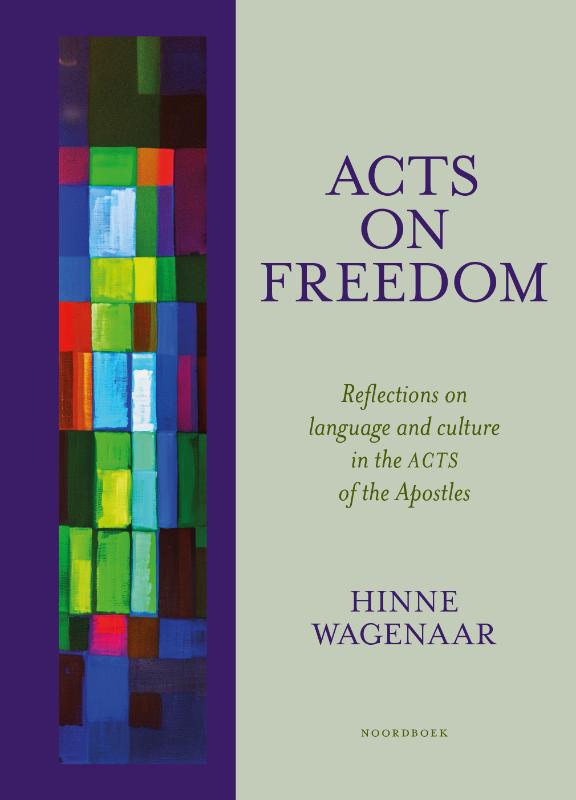
ACTS on Freedom
€ 24,90
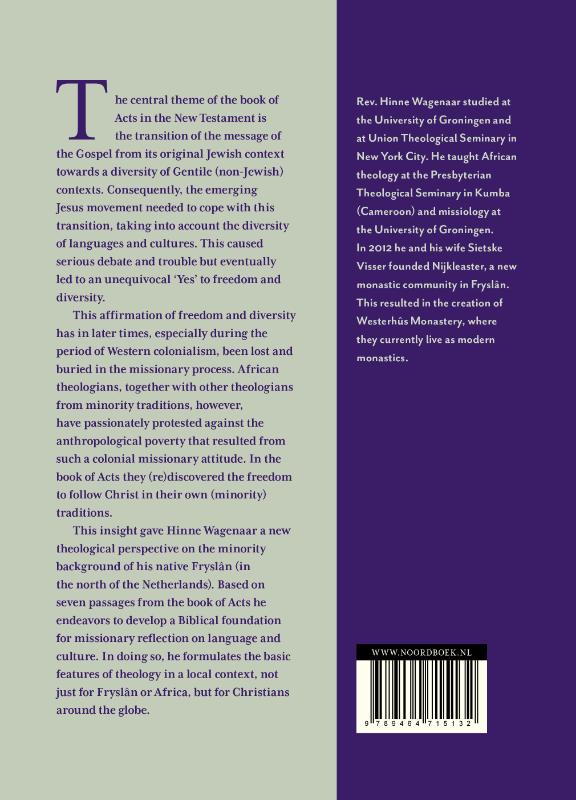
The central theme of the book of Acts in the New Testament is the transition of the message of the Gospel from its original Jewish context towards a diversity of Gentile (non-Jewish) contexts. Consequently, the emerging Jesus movement needed to cope with this transition, taking into account the diversity of languages and cultures. This caused serious debate and trouble but eventually led to an unequivocal ‘Yes’ to freedom and diversity.
This affirmation of freedom and diversity has in later times, especially during the period of Western colonialism, been lost and buried in the missionary process. African theologians, together with other theologians from minority traditions, however, have passionately protested against the anthropological poverty that resulted from such a colonial missionary attitude. In the book of Acts they (re)discovered the freedom to follow Christ in their own (minority) traditions.
This insight gave Hinne Wagenaar a new theological perspective on the minority background of his native Fryslân (in the north of the Netherlands). Based on seven passages from the book of Acts he endeavors to develop a Biblical foundation for missionary reflection on language and culture. In doing so, he formulates the basic features of theology in a local context, not just for Fryslân or Africa, but for Christians around the globe.
Rev. Hinne Wagenaar studied at the University of Groningen and at Union Theological Seminary in New York City. He taught African theology at the Presbyterian Theological Seminary in Kumba (Cameroon) and missiology at the University of Groningen. In 2012 he and his wife Sietske Visser founded Nijkleaster, a new monastic community in Fryslân. This resulted in the creation of Westerhûs Monastery, where they currently live as modern monastics.
Gerelateerde boeken
-

-
-
De inquisiteur
Pieter Titelmans en zijn strijd tegen het protestantisme (1501-1572)€ 27,90E-book: € 22,99 -
Waarom de tijd (niet) stroomt
Tijd bezien vanuit de natuurkunde, filosofie, psychologie en spiritualiteit€ 22,90E-book: € 18,99