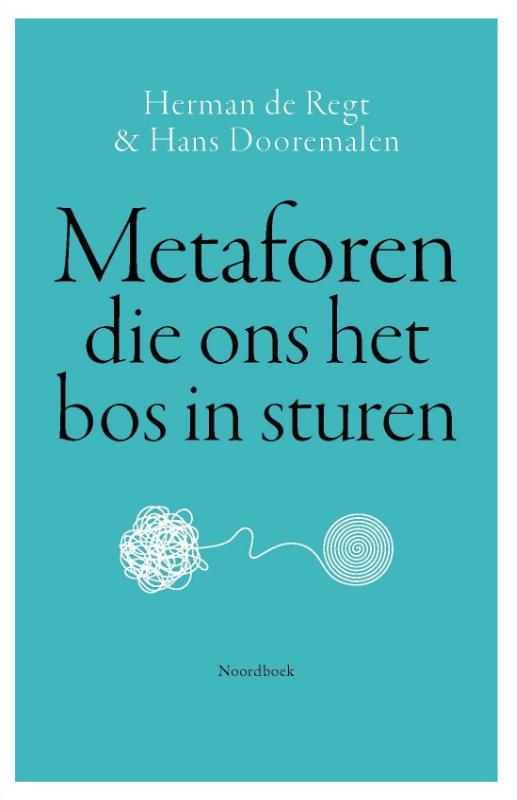
Metaforen die ons het bos in sturen
€ 24,90
Als iets de mens uniek maakt, dan is dat niet het denken, maar het gebruik van metaforen. De mens is het enige wezen dat in metaforen spreekt. Vreemd eigenlijk. Waarom gebruiken we zo vaak metaforen? Wat leveren die metaforen ons op?
In dit boek bespreken de wetenschapsfilosofen Herman de Regt en Hans Dooremalen hoe metaforen werken, hoe we onszelf, als mens, op metaforische wijze beschrijven, en wanneer metaforen ons tot last worden. Tot slot waarschuwen ze voor misbruik van metaforen. Wie in argumentaties en conclusies metaforen gebruikt, zit per definitie fout. Metaforen zijn immers onwaar.
Herman de Regt en Hans Dooremalen zijn als wetenschapsfilosofen verbonden aan Tilburg University. Ze schreven onder meer het wetenschapsfilosofisch handboek Exploring Humans en Het snapgevoel. Hoe de illusie van begrip ons denken gijzelt, dat een vervolg is op Wat een onzin!
Gerelateerde boeken
-
-

Het mooie vogelwoorden boek
€ 19,90Toine Andernach zet bijzonder vogeljargon in de schijnwerpers, vergeten vogelwoorden maar ook nieuwe woorden. In het voetspoor van taalkunstenaars als Ivo de Wijs, Drs. P en Hans Dorrestijn, die zijn inspiratiebron vormen, deelt hij hun liefde voor de natuur en speelt virtuoos met taal.
Wat is een hemelgeit? Wat doet een zeetrekteller? En van wie profiteert een pelagische kleptoparasiet? In luchtige, soms hilarische, maar altijd informatieve teksten over mooie vogelwoorden deelt Toine Andernach zijn fascinatie voor de manier waarop vogelaars vogels en de vogelwereld aanduiden in onze taal. Daarin verweeft hij zijn persoonlijke vogelervaringen in het veld.
Het mooie vogelwoorden boek is het perfecte cadeauboek voor vogelaars en taalliefhebbers. Voor beginnende vogelaars is het een gids in het woud van het vogelvocabulaire. Voor ervaren vogelaars is het een feest van herkenning. En voor taalliefhebbers gewoon smullen.Toine Andernach heeft een fascinatie voor taal en is gepassioneerd vogelaar. Eerder verscheen van zijn hand het succesvolle Baardman & Boterkontje, de vogel en zijn naam. Met tekeningen van Jos Zwarts.
-
Nedersaksisch in een notendop
€ 22,95Het Nedersaksisch kreeg in 2018 nationale erkenning als volwaardige en zelfstandige taal.
In Nedersaksisch in een notendop beschrijven vijf kenners het Gronings, Drents, Stellingwerfs, Sallands, Twents, Achterhoeks en Veluws. Beknopt, maar wel in al hun facetten.
Aan de orde komen: de klanken, woordvormen, zinsbouwkenmerken en de grote woordenboekprojecten. Daarnaast is er veel aandacht voor de maatschappelijke positie, de beheersing en het gebruik van het Nedersaksisch.Kennisontwikkeling, aanmoediging tot gebruik en ook de zorg voor de taal zijn zaken die vooral in de verschillende regio’s plaatsvinden. Daarover biedt dit boek eveneens de nodige informatie, evenals over instituten en organisaties die zich met het Nedersaksisch bezighouden.
De Nedersaksische literatuur is overzichtelijk gepresenteerd naar periode en regio en de bronnenlijst nodigt de lezer uit zich verder in deze mooie, eeuwenoude taal te verdiepen.Nedersaksisch in een notendop is bedoeld voor mensen met een brede interesse in streektalen. Studenten Nederlands, Duits en Fries kunnen met dit boek hun kennis over het Nedersaksisch naar een hoger niveau tillen. Ook voor medewerkers van (regionale) taalinstituten kan dit boek een welkome aanvulling zijn op hun kennis over het Nedersaksisch.
-