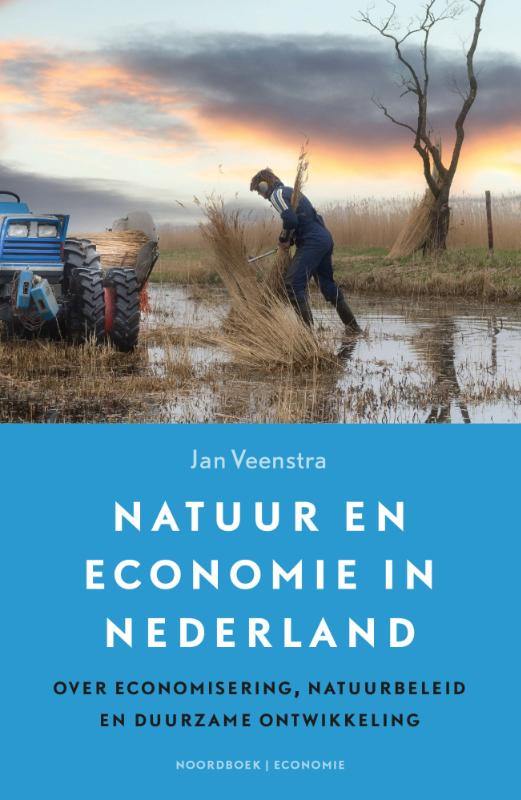
Natuur en economie in Nederland
€ 17,90
Natuurbescherming door de overheid wordt vooral gedreven vanuit het motief van de schoonheid. Natuur is mooi en waardevol. Maar de laatste decennia is er iets veranderd: de natuur wordt steeds vaker bekeken door een economische bril, de economisering van de natuur. Jan Veenstra onderzoekt in Natuur en economie in Nederland wat dat inhoudt en wat er gebeurt met de natuur als economische belangen steeds belangrijker worden.
In zijn analyse onderscheidt hij twee belangrijke vormen van economisering, geeft hij een historisch overzicht van de betrokkenheid van de overheid bij natuurbescherming en de dilemma’s waarmee natuurorganisaties als Staatsbosbeheer en Natuurmonumenten mee worstelen. Het pleidooi van Veenstra? Natuurbehoud op lange termijn kan niet zonder economisch draagvlak. Daarom is het belangrijk de economische waarde van de natuur beter te kennen, moet de overheid blijvend investeren in natuur, en zal de economie zo ingericht moeten worden dat deze met de natuur meewerkt, niet ertegen.
Jan Veenstra is econoom en heeft 28 jaar bij Staatsbosbeheer gewerkt waarvan de laatste jaren als senior beleidsmedewerker Ecosysteemdiensten. Na zijn pensioen was hij voorzitter van de Eurosite groep ‘on Economics and Ecosystem Services’.
De bijlagen voor ‘Natuur en economie in Nederland’ zijn via onderstaande link te downloaden.
Gerelateerde boeken
-
Faune et flore de la Forêt de Soignes
€ 17,50La Forêt de Soignes est reconnue comme site patrimoine mondial de l’Unesco ”Forêts primaires et anciennes de hêtres”. Un beau titre pour une forêt déjà mentionnée dans les chartes en latin du Xlle siècle. Cette vaste forêt était le terrain de chasse préféré des ducs et des princes à travers les siècles. Malgré un lotissement suivie d’une déforestation à grande échelle dans les années 1830, la forêt urbaine de Bruxelles s’êtend toujours sur plus de 5.000 hectares.
Le guide nature Faune et Flore de la Forêt de Soignes vous invite à découvrir la plus belle forêt urbaine d’Europe. Pour les débutants, le départ idéal pour connaître les plantes et les animaux de leur environnement, pour les naturalistes la dé pour découvrir de nouvelles groupes d’espèces moins connues. Le guide est illustré de jolies diamaras des habitats et des centaines d’illustrations réalistes des espèces par le célèbre illustrateur de la nature Toni Llobet, complété par un texte d’expert de l’écologiste Hans Baeté, et sous la direction scientifique du Prof. Bart Muys de la KU Leuven.
Ce guide est le premier dans une nouvelle série de merveilleux guides de terrain pour Les parques naturelles du Benelux. La particularité de ces guides est qu’ils présemtemt de manière exhaustive une seule région naturelle: plantes, champignons, insectes, oiseaux, mammifères tout inclus. Ainsi, le randonneur peut commencer son exploration avec un seul guide en main.
-
Een vlucht distelvlinders
€ 17,90De distelvlinder is de vlinder aller vlinders. Hij weegt anderhalve gram, heeft hersenen ter grootte van een speldenknop en vliegt elk najaar ruim 4000 kilometer van Europa naar de tropische Afrikaanse savanne. Waarom? Hoe weet hij de weg? Ontdekkingen van onderzoekers en kunstenaars door de eeuwen heen geven ons een inkijkje in het fascinerende leven van deze wereldreiziger.
-
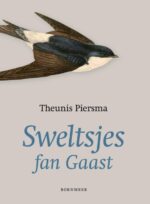
Sweltsjes fan Gaast
€ 15,00Theunis Piersma is heechlearaar Trekfûgelekology yn Grins en is in ynternasjonale autoriteit op dat gebied. Op syn fakgebied hat Piersma in ôfgryslik soad skreaun. Yn syn frije tiid docht er yn syn wenplak Gaast ûndersyk nei sweltsjes. Syn buorfrou frege him ‘Wêr bliuwe ús sweltsjes winterdeis, Theunis’. Dy fraach wie oanlieding foar in syktocht nei sweltsjes, nei hoe’t se libje en wêr’t se bliuwe.. Piersma ferstiet de keunst om syn wittenskiplik ynsjoch oer de bringen oan in breed publyk sûnder de kwaliteit te koart te dwaan. Dit is syn earste boek yn syn memmetaal. In oade oan sweltsjes en oan Fryslân.
-