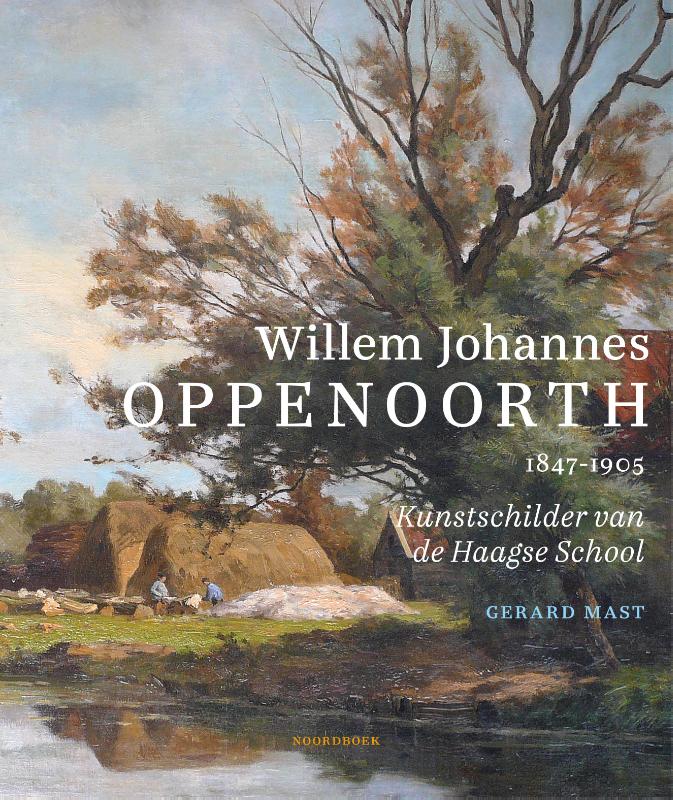
Willem Johannes Oppenoorth (1847-1905)

Kunstschilder van de Haagse School

 29,90

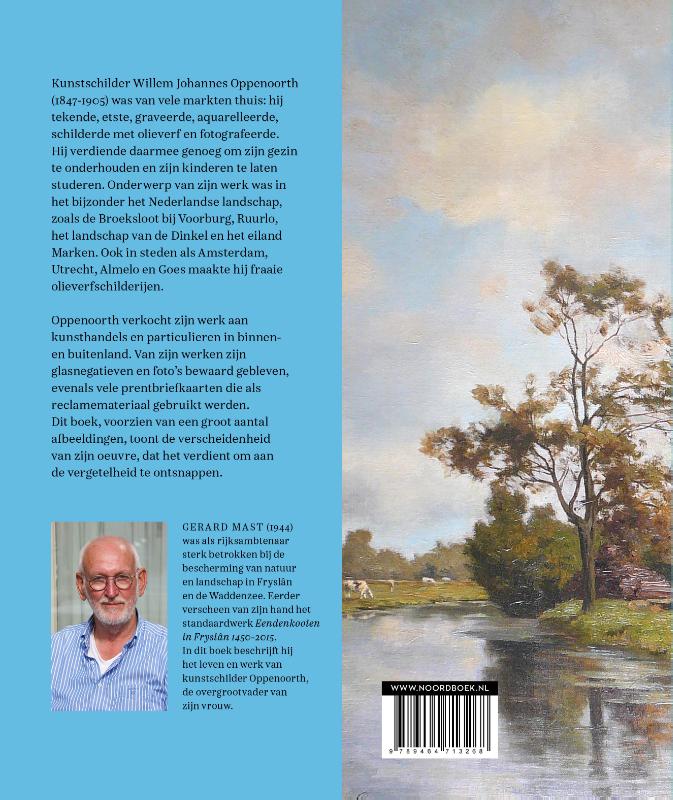
Kunstschilder Willem Johannes Oppenoorth (1847-1905) was van vele markten thuis: hij tekende, etste, graveerde, aquarelleerde, schilderde met olieverf en fotografeerde. Hij verdiende daarmee genoeg om zijn gezin te onderhouden en zijn kinderen te laten studeren. Onderwerp van zijn werk was in het bijzonder het Nederlandse landschap, zoals de Broeksloot bij Voorburg, Ruurlo, het landschap van de Dinkel en het eiland Marken. Ook in steden als Amsterdam, Utrecht, Almelo en Goes maakte hij fraaie olieverfschilderijen.

Oppenoorth verkocht zijn werk aan kunsthandels en particulieren in binnen- en buitenland. Van zijn werken zijn glasnegatieven en foto’s bewaard gebleven, evenals vele prentbriefkaarten die als reclamemateriaal gebruikt werden. Dit boek, voorzien van een groot aantal afbeeldingen, toont de verscheidenheid van zijn oeuvre, dat het verdient om aan de vergetelheid te ontsnappen.

Gerard Mast (1944) was als rijksambtenaar sterk betrokken bij de bescherming van natuur en landschap in Fryslân en de Waddenzee. Eerder verscheen van zijn hand het standaardwerk Eendenkooien in Fryslân 1450-2015. In dit boek beschrijft hij het leven en werk van kunstschilder Oppenoorth, de overgrootvader van zijn vrouw.

Verschijningsvorm:
Hardcover
Taal:
Nederlands
Uitgeverij:
Uitgeverij Noordboek
Aantal pagina's:
168
Druk:
1
ISBN:
9789464713268
Gewicht:
1065 gram
Afmeting:
269x227x20 mm
Uitgiftedatum:
22-04-2025
Bekijk meer informatie over de auteur(s) van deze titel:

Gerelateerde boeken

  • Cache-sexe

    Cache-sexe

    Covered, uncovered, discovered
    Philip van Kerrebroeck
     34,90

    Cache-sexe

    This book asks why humans through history have covered their genitals and worn a cache-sexe. Does the cache-sexe merely provide protection, or is it an instrument to draw attention? Can the cache-sexe be used to stimulate certain thoughts? Why does not wearing a cache-sexe provoke shame one society but not in another? Are nudity and nakedness the same?

    On his quest to answer these questions, the author takes the reader on a review of the anatomy of the female and male genitals and reflects on how this part of the human body has been perceived over time and in various cultures. The different types of male and female cache-sex are discussed with reference to comprehensive illustrations based on unique and sometimes previously unpublished examples of cache-sexes and photographic documentation. The book also pays attention to the covering of the ‘backside’. Following this 360° exploration of the use of the cache-sexe, the place of the cache-sexe in art and fashion is uncovered.

    Philip Van Kerrebroeck is an urologist and professor emeritus of Urology at the University of Maastricht. Born in Leuven (Belgium), he trained in Surgery and Urology in Brussels, Utrecht, Nijmegen and San Francisco. Over the years, he has also developed an interest in the history of urology and cultural anthropology. He is currently chairman of the History Office of the European Association of Urology (EAU).

     34,90
  • Jochem Hamstra

    Jochem Hamstra

    Een fragment van leven
    Susan van den Berg
     27,50

    Jochem Hamstra

    De schilderkunst van Jochem Hamstra (1962, Heerenveen) beweegt zich tussen figuratie en abstractie, maar is altijd gestoeld op de visuele waarneming. Hij schildert het liefst op de achterkant van linnen, omdat het materiaal zo de meeste weerstand biedt. Die weerbarstigheid is ook te vinden in zijn soms stugge vormentaal, terwijl de schilderijen vaak een melancholieke sfeer ademen. Dankzij een sterke persoonlijke stijl en een geraffineerd gevoel voor kleur is zijn werk altijd verrassend en toch herkenbaar. Zo heeft hij een coherent en kwalitatief hoogstaand oeuvre opgebouwd, dat nog nooit in de volle breedte is getoond. Reden genoeg voor Museum Belvédère om zijn eerste museale solotentoonstelling te organiseren, met bijbehorende publicatie.

     27,50
  • Bach dag na dag

    Bach dag na dag

    Een jaar vol hemelse muziek
    Ignace Bossuyt
     39,90
  • Victor Horta and the Frison House in Brussels

    In the middle of the Lebeaustraat in Brussels, sandwiched between neo-Renaissance and neo-Gothic houses, stands an Art Nouveau jewel designed by Victor Horta: the Frison House. It was
    commissioned by Maurice Frison, a lawyer and friend of the architect, and was built in 1894-1895. Horta designed not only the house, but also all its furniture and decoration, right down to the smallest detail: from door handles to marble fireplaces, from mosaic floors to elegant banisters, from wall lamps to the gratings for the cellar openings. The absolute eyecatcher is the winter garden, whose elegant design allows soft yellow light to flow subtly into its perfectly proportioned space.

    Nupur Tron is the author of this book and owner of the house. In recent years, she has breathed new life back into Horta’s masterpiece. She pieced together bits of the old chandeliers she found in one of the cellars. She had items of furniture designed by Horta lovingly restored. With great passion, she continues to search for the funds that will allow her to restore the entire house to its former glory, one step at a time.

    Horta and the Frison House in Brussels is an ode to the architect and his creation.

    Nupur Tron is from India. She studied Design, Marketing & Merchandising and Fine Arts at the Fashion Institute of Technology in New York. She designs jewellery, in which the different styles of east and west meet in harmony.

     19,90