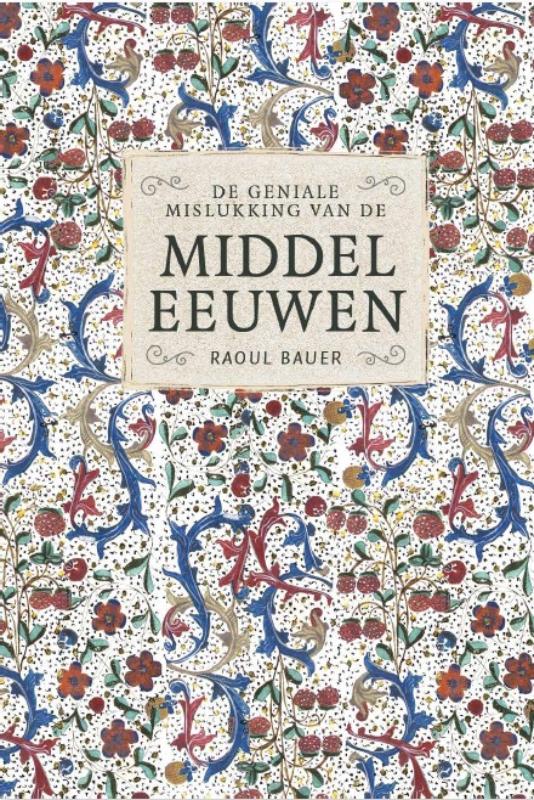
De geniale mislukking van de middeleeuwen
€ 19,90
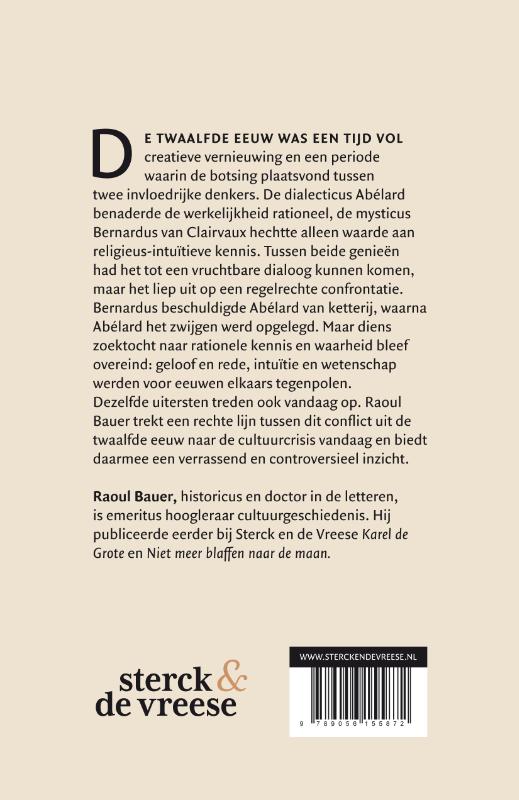
De twaalfde eeuw was een tijd vol creatieve vernieuwing en een periode waarin de botsing plaatsvond tussen twee invloedrijke denkers. De dialecticus Abélard benaderde de werkelijkheid rationeel, de mysticus Bernardus van Clairvaux hechtte alleen waarde aan religieus-intuïtieve kennis. Tussen beide genieën had het tot een vruchtbare dialoog kunnen komen, maar het liep uit op een regelrechte confrontatie. Bernardus beschuldigde Abélard van ketterij, waarna Abélard het zwijgen werd opgelegd. Maar diens zoektocht naar rationele kennis en waarheid bleef overeind: geloof en rede, intuïtie en wetenschap werden voor eeuwen elkaars tegenpolen. Dezelfde uitersten treden ook vandaag op. Raoul
Bauer trekt een rechte lijn tussen dit conflict uit de twaalfde eeuw naar de cultuurcrisis vandaag en biedt daarmee een verrassend en controversieel inzicht.
Raoul Bauer, historicus en doctor in de letteren, is emeritus hoogleraar cultuurgeschiedenis. Hij publiceerde eerder bij Sterck en de Vreese Karel de Grote en Niet meer blaffen naar de maan.
Gerelateerde boeken
-
-
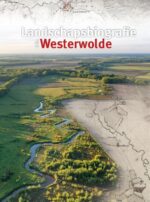
Landschapsbiografie van Westerwolde
€ 39,95Westerwolde kent een grote variatie aan bijzondere cultuurlandschappen: van het unieke kloosterlandschap van Ter Apel in het zuiden, het nog zeer goed bewaard gebleven esdorpenlandschap langs de Ruiten Aa met zijn oude nederzettingen, essen, heidevelden en beekdalen, de historische verdedigingslinie rond Bourtange en Oudeschans tot aan de weidse veenontginningslandschappen bij Vriescheloo en Bellingwolde. Weinig streken in Noord-Nederland hebben zoveel bijzondere cultuurhistorische relicten en een zo rijk gelaagde geschiedenis met tal van bijzondere historische verhalen.
Door de verschillende grondsoorten heeft Westerwolde een sterk gevarieerde agrarische geschiedenis die tot op heden bepalend is voor het landelijk gebied. Ook de waterstaatkundige geschiedenis van Westerwolde heeft een eigen gezicht. Daarnaast is de streek ook rijk aan allerlei soorten natuur: in de beekdalen van Runde, Ruiten Aa, Mussel Aa en Westerwoldse Aa, in de bossen en heidevelden, maar ook in het boerenlandschap met zijn talrijke houtwallen, singels, akkerflora en bosjes. Juist de in eeuwen gegroeide intensieve verbinding tussen natuur en cultuur maken dit gebied zo belangrijk en veelzijdig.De Landschapsbiografie van Westerwolde is tegelijkertijd ook een biografie van mensen. Tientallen generaties bewoners, maar ook voorbijgangers en buitenstaanders, hebben het landschap in de loop der eeuwen gemaakt tot dat wat het nu is, en doen dat ook nu en in de toekomst. Om die reden wordt in deze biografie ook veel aandacht besteed aan hun leven, hun drijfveren, hun activiteiten en hun zichtbare sporen in het huidige landschap.
De Landschapsbiografie van Westerwolde is een wetenschappelijk verantwoord, toegankelijk geschreven verhaal over de ontstaansgeschiedenis, kwaliteiten en toekomstmogelijkheden van het landschap in deze regio. De biografie is rijk geïllustreerd met landschapsfoto’s, kaarten en landschapsreconstructies die de verschillende levensfasen van Westerwolde weerspiegelen.
-