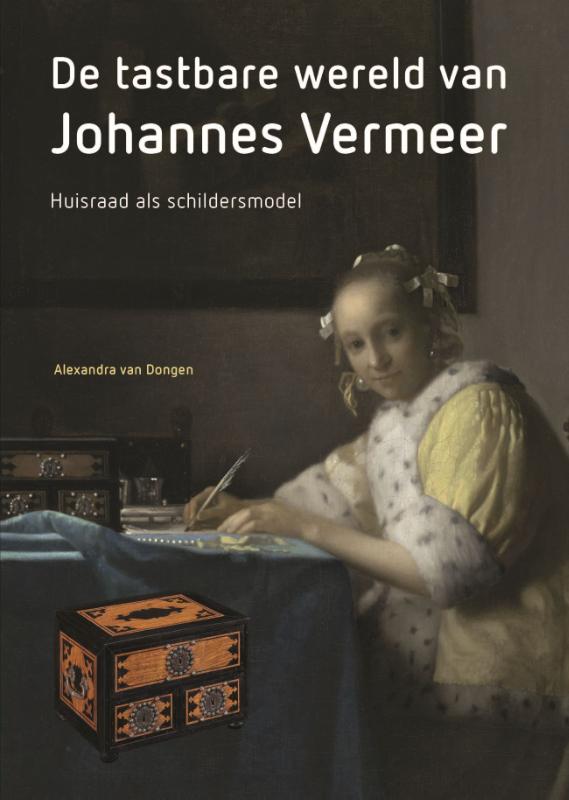
De tastbare wereld van Johannes Vermeer
€ 29,90
De befaamde Delftse schilder Johannes Vermeer (1632-1675) beeldde uiteenlopende huiselijke gebruiksvoorwerpen af in zijn schilderijen: van een eenvoudig wilgentenen broodmandje tot een kostbaar Indo-Portugees juwelenkistje gemaakt van teak- en ebbenhout. Nooit eerder zijn overgeleverde voorbeelden van zeventiende-eeuws huisraad, zoals het uiterst realistisch en bijna tastbaar in Vermeers werk figureert, in één publicatie bijeengebracht. Nauwkeurige identificatie van zowel functioneel als decoratief huisraad, zoals kooken keukengerei, schenk- en drinkgerei (glaswerk, bestek), meubilair (stoelen, tafels), en specifieke door Vermeer uitgebeelde objecten zoals een koperen kroonluchter, zilveren inktstel, muntgewichtdoos, toiletgerei, sieraden en oosterse tapijten, biedt een verrassend perspectief op de ontstaansgeschiedenis van zijn oeuvre.
Recent onderzoek door kunsthistorica Alexandra van Dongen richt onze blik zo op de materiële objecten in Vermeers voorstellingen, die ze verbindt met voorbeelden van overgeleverde huisraad uit de tijd van Vermeer. Haar onderzoek is onderdeel van een langlopend project genaamd ALMA: Art Linked to Material Artefacts bij Museum Boijmans Van Beuningen in Rotterdam.
Alexandra van Dongen (Leiden 1961) is conservator historische vormgeving van Museum Boijmans Van Beuningen in Rotterdam. In 2022 publiceerde ze haar boek Dichter bij Vincent. Alledaagse voorwerpen in het werk van Vincent van Gogh, waarmee ze in 2024 de Mr. J.W. Frederiksprijs won.
Gerelateerde boeken
-
Kunst in Games
€ 19,95In de bijna onbeperkte mogelijkheden om ‘uit te beelden’, historische werkelijkheden digitaal te verwezenlijken en fantasie om te zetten in werelden die zich hyperrealistisch voordoen, loopt de game voorop. Beter dan welke andere discipline ook is zij in staat mensen te betrekken en werelden te laten ervaren waarin werkelijkheid en fantasie, waarheid en fictie in elkaar vervloeien.
Games komen tot stand dankzij de bijdragen van honderden specialisten uit verschillende vakgebieden. Tezamen hebben zij de laatste decennia de game in technologisch maar ook beelden opzicht naar een uitzonderlijk hoog niveau weten te tillen.
Het boek ‘Kunst in Games’ blikt terug op vijftig jaar innovatie, maar schenkt vooral aandacht aan laatste ontwikkelingen en aan het werk van een toonaangevende kunstenaars binnen de game industrie.
-
Helmen vol verhalen
€ 25,00Helmen Vol Verhalen is een landelijk project waarin veteranen worden gekoppeld aan kunstenaars, die het persoonlijke missieverhaal van de veteraan vertalen in een kunstwerk waarin de ‘helm’ als metafoor voor het militaire beroep is verwerkt. In het boek Helmen Vol Verhalen worden de verhalen van de veteranen opgenomen en ook het verhaal van de kunstenaar achter het werk. Het vertelt waarom en hoe het kunstwerk tot stand is gekomen. Op de voorgrond staat het verhaal van de veteraan, over ‘op missie gaan’. Veel Nederlanders kunnen zich daar niets bij voorstellen. Deze verhalen geven een indrukwekkend inzicht in de werkelijkheid en de impact dat het heeft op de veteranen en hun thuisfront.
Als oud-matroos en veteraan leidt Amy van Son het project Helmen vol verhalen. ‘In vroegere tijden rukte het hele dorp uit om haar krijgers binnen te halen na een veldslag. Dat kun je je nu niet meer voorstellen. Zeker niet als het ‘jonge’ veteranen betreft. Om weer meer begrip en erkenning voor veteranen te krijgen, moeten burgers weten wat het betekent om naar een oorlog gestuurd te worden. Maar veel veteranen vinden het moeilijk hun ervaringen onder woorden te brengen. Daarom laten we veteranen hun verhaal vertellen aan een kunstenaar. Die vertaalt dat naar een kunstwerk. Het proces, het eindresultaat en de band die daaruit ontstaan, zijn helend.’
Ook voor Amy zelf. ‘De onthulling van elk kunstwerk – tweeëntwintig tot nu toe – emotioneert me telkens weer. Want door iets te betekenen voor anderen, erken ik ook mezelf.’Amy van Son brengt met Helmen vol verhalen een eerbetoon aan degenen die hun leven gewijd hebben aan de bescherming van vrijheid en vrede. Dit boek is een diepgaande en aangrijpende ervaring die je kijk op oorlog, moed en menselijkheid zal veranderen.
-