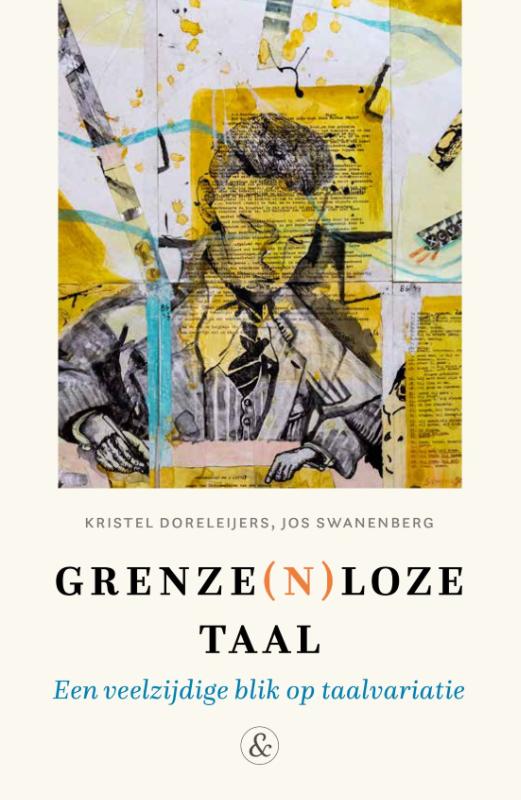
Grenze(n)loze taal
€ 24,90
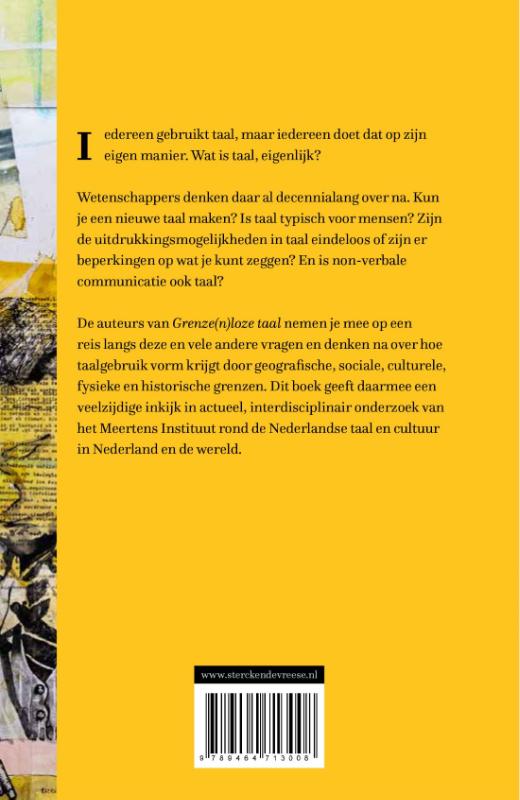
Iedereen gebruikt taal, maar iedereen doet dat op zijn eigen manier. Wat is taal, eigenlijk?
Wetenschappers denken al decennialang over na. Kun je een nieuwe taal maken? Is taal typisch voor mensen? Zijn de uitdrukkingsmogelijkheden in taal eindeloos of zijn er beperkingen op wat je kunt zeggen? En is non-verbale communicatie ook taal?
De auteurs van Grenze(n)loze taal nemen je mee op een reis langs deze en vele andere vragen en denken na over hoe taalgebruik vorm krijgt door geografische, sociale, culturele, fysieke en historische grenzen. Dit boek geeft daarmee een veelzijdige inkijk in actueel, interdisciplinair onderzoek van het Meertens Instituut rond de Nederlandse taal en cultuur in Nederland en de wereld.
Gerelateerde boeken
-
-
Humanity is Not a Plague
€ 19,90In ‘Humanity is Not a Plague’, Cees Buisman argues that it is possible for 10 billion people to exist together on this Earth – as predicted for the year 2100 – provided that the richer part of the world no longer merely focuses on its own health, prosperity and happiness, and instead starts working seriously on developing a higher consciousness.
In this essay, Buisman sharply analyzes some of the problems facing mankind, such as fresh water shortages, whilst overturning several clichés and offering unexpected, positive solutions. Overpopulation is not the problem; the effects of our actions on the rest of the world have a much greater impact. ‘Back to nature’ is not the solution, nor is an overreliance on science and innovation. Large-scale technologies could even increase our problems. It seems that the growth of humanity will depend on the growth of our consciousness.
Cees Buisman studied water purification engineering, in addition to business administration, communication theory and applied integral psychology. Throughout his life he has worked on new environmental technologies, which are used in industry all over the world. His scientific work is highly cited. Buisman is the Director of Wetsus – European Center for Sustainable Water Technology, and Professor at Wageningen University, in the Netherlands.
-
Het mooie vogelwoorden boek
€ 19,90Toine Andernach zet bijzonder vogeljargon in de schijnwerpers, vergeten vogelwoorden maar ook nieuwe woorden. In het voetspoor van taalkunstenaars als Ivo de Wijs, Drs. P en Hans Dorrestijn, die zijn inspiratiebron vormen, deelt hij hun liefde voor de natuur en speelt virtuoos met taal.
Wat is een hemelgeit? Wat doet een zeetrekteller? En van wie profiteert een pelagische kleptoparasiet? In luchtige, soms hilarische, maar altijd informatieve teksten over mooie vogelwoorden deelt Toine Andernach zijn fascinatie voor de manier waarop vogelaars vogels en de vogelwereld aanduiden in onze taal. Daarin verweeft hij zijn persoonlijke vogelervaringen in het veld.
Het mooie vogelwoorden boek is het perfecte cadeauboek voor vogelaars en taalliefhebbers. Voor beginnende vogelaars is het een gids in het woud van het vogelvocabulaire. Voor ervaren vogelaars is het een feest van herkenning. En voor taalliefhebbers gewoon smullen.Toine Andernach heeft een fascinatie voor taal en is gepassioneerd vogelaar. Eerder verscheen van zijn hand het succesvolle Baardman & Boterkontje, de vogel en zijn naam. Met tekeningen van Jos Zwarts.
-
Introduction to Dutch Low Saxon Language and Literature
€ 26,50In 2018, Dutch Low Saxon received national recognition as a full-fledged language in its own right.
In “Introduction to Dutch Low Saxon”, five experts offer a concise yet multifaceted description of Gronings, Drents, Stellingwerfs, Sallands, Twents, Achterhoeks, and Veluws.
The authors cover the sounds, word forms, syntactic characteristics, as well as large-scale dictionary projects. In addition, ample attention is paid to the position the language occupies in society, and to the command and usage of Dutch Low Saxon.
The development of knowledge about Dutch Low Saxon, encouragement to use it, and also preservation of the language are matters that mainly take place in the various regions. This book offers plenty of information on these aspects, and also on the institutes and organisations that deal with Dutch Low Saxon.
Dutch Low Saxon literature is clearly presented on the basis of periods and regions, and the list of sources invites the reader to further delve into the wonders of this centuries-old language.“Introduction to Dutch Low Saxon” is aimed at people with a general interest in regional languages. This book allows students of Dutch, German and Frisian to raise their knowledge to a higher level. This book may also serve to supplement the knowledge of Dutch Low Saxon of people who work at (regional) language institutes.