
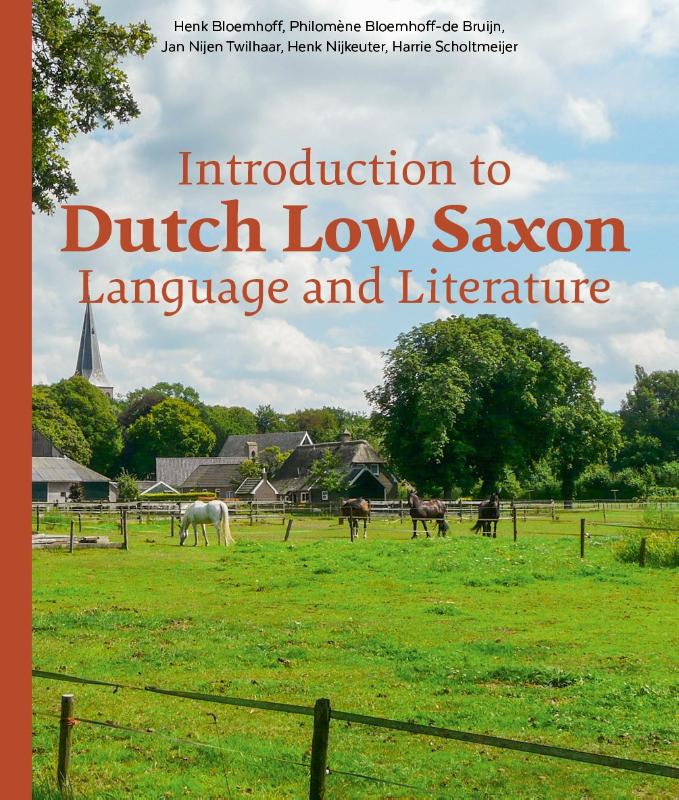
Introduction to Dutch Low Saxon Language and Literature
€ 26,50
In 2018, Dutch Low Saxon received national recognition as a full-fledged language in its own right.
In “Introduction to Dutch Low Saxon”, five experts offer a concise yet multifaceted description of Gronings, Drents, Stellingwerfs, Sallands, Twents, Achterhoeks, and Veluws.
The authors cover the sounds, word forms, syntactic characteristics, as well as large-scale dictionary projects. In addition, ample attention is paid to the position the language occupies in society, and to the command and usage of Dutch Low Saxon.
The development of knowledge about Dutch Low Saxon, encouragement to use it, and also preservation of the language are matters that mainly take place in the various regions. This book offers plenty of information on these aspects, and also on the institutes and organisations that deal with Dutch Low Saxon.
Dutch Low Saxon literature is clearly presented on the basis of periods and regions, and the list of sources invites the reader to further delve into the wonders of this centuries-old language.
“Introduction to Dutch Low Saxon” is aimed at people with a general interest in regional languages. This book allows students of Dutch, German and Frisian to raise their knowledge to a higher level. This book may also serve to supplement the knowledge of Dutch Low Saxon of people who work at (regional) language institutes.
Gerelateerde boeken
-
Nedersaksisch in een notendop
€ 22,95Het Nedersaksisch kreeg in 2018 nationale erkenning als volwaardige en zelfstandige taal.
In Nedersaksisch in een notendop beschrijven vijf kenners het Gronings, Drents, Stellingwerfs, Sallands, Twents, Achterhoeks en Veluws. Beknopt, maar wel in al hun facetten.
Aan de orde komen: de klanken, woordvormen, zinsbouwkenmerken en de grote woordenboekprojecten. Daarnaast is er veel aandacht voor de maatschappelijke positie, de beheersing en het gebruik van het Nedersaksisch.Kennisontwikkeling, aanmoediging tot gebruik en ook de zorg voor de taal zijn zaken die vooral in de verschillende regio’s plaatsvinden. Daarover biedt dit boek eveneens de nodige informatie, evenals over instituten en organisaties die zich met het Nedersaksisch bezighouden.
De Nedersaksische literatuur is overzichtelijk gepresenteerd naar periode en regio en de bronnenlijst nodigt de lezer uit zich verder in deze mooie, eeuwenoude taal te verdiepen.Nedersaksisch in een notendop is bedoeld voor mensen met een brede interesse in streektalen. Studenten Nederlands, Duits en Fries kunnen met dit boek hun kennis over het Nedersaksisch naar een hoger niveau tillen. Ook voor medewerkers van (regionale) taalinstituten kan dit boek een welkome aanvulling zijn op hun kennis over het Nedersaksisch.
-
Werelderfgoedgids Veenhuizen
Werelderfgoed Koloniën van Weldadigheid à Koloniën van Weldadigheid€ 17,90
Werelderfgoedgids Veenhuizen
€ 17,90Zin om te wandelen of fietsen in het UNESCO Werelderfgoed Koloniën van Weldadigheid in Nederland? Deze gids is je wegwijzer mét achtergrondinformatie. De gids is geschikt voor wie zich van tevoren wil oriënteren, maar ook voor wie tijdens een verblijf in de Koloniën van Weldadigheid een leidraad zoekt en meer wil weten over de achtergrond van het gebied. De wandeling voert door het Werelderfgoed, de fietsroute beslaat een iets ruimer gebied.
De Koloniën van Weldadigheid zijn sinds 27 juli 2021 ingeschreven als UNESCO Werelderfgoed. Zo erkent UNESCO de cultuurlandschappen van Frederiksoord-Wilhelminaoord en Veenhuizen in Nederland, en Wortel-Kolonie in Vlaanderen, als van uitzonderlijke en universele betekenis voor de hele mensheid.
-
Landschapsbiografie van de Drentsche Aa
€ 25,00Op 2 juli 2015 verschijnt een bijzonder boek dat laat zien hoe het stroomdal van de Drentsche Aa door de tijd heen veranderde in het prachtige esdorpenlandschap van nu. Tijdens het congres ‘Het Experiment van de Drentsche Aa’ wordt het boek feestelijk gepresenteerd. Het boek is daarna tijdens het festival verkrijgbaar op de Brink in Zeegse!
Het Nationaal Beek- en Esdorpenlandschap Drentsche Aa behoort tot de meest geliefde en waardevolle landschappen. Geen enkel gebied in Noordwest-Europa kent zoveel natuurlijke beken met bijbehorende biodiversiteit als deze streek. Aardkundige sporen uit maar liefst drie verschillende ijstijden liggen hier letterlijk aan onze voeten. Ook in archeologisch opzicht behoort het gebied tot de top van Nederland. Dit uitzonderlijk gaaf bewaard gebleven esdorpenlandschap met zijn fraaie brinkdorpen, zijn oude essen, groenlanden en heidevelden kreeg in 2003 als eerste in Nederland het predikaat Nationaal Landschap.
Deze Landschapsbiografie van de Drentsche Aa beschrijft de lange levensloop van dit bijzondere landschap: van de eerste geologische processen enkele miljoenen jaren geleden, via de prehistorie en historische tijd tot aan het moderne landschap van vandaag. Een team van dertig deskundigen ontsluit in dit boek vijftig jaar wetenschappelijk onderzoek. De biografie is rijk geïllustreerd met landschapsfoto’s,kaarten en landschapsreconstructies die de verschillende levensfasen van de Drentsche Aa weerspiegelen.
Een rijk gevarieerde biografie als ode aan een uniek landschap.
Ineke Noordhoff schreef een aantal columns over de landschapsbiografie van de Drentsche Aa.
Klink op de link om haar verhalen te lezen.
Altijd anders 1 -
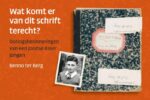
Wat komt er van dit schrift terecht
€ 27,50En ik kreeg een vreselijke haat voor alles wat ‘mens’ heette.
Benno, januari 1941Benno ter Berg.
15 jaar.
Geboren en getogen in Assen.
Hbs-leerling.
Natuurliefhebber.
Zoon, broer, neef, vriend.
En Joods.Leef mee met een Joodse Asser tiener in de bijzondere jaren 1939 tot 1942. Verbaas je over de manier hoe hij de oorlog beschrijft en wat dat met hem en zijn omgeving doet. Benno begint neutraal met een opsomming van de oorlogshandelingen, maar beetje bij beetje wordt zijn verhaal persoonlijker als de anti-Joodse maatregelen toenemen.
Als Benno schrijft dat hij niet meer naar de hbs in Assen mag, zet hij daar vijf uitroeptekens bij. Het is helemaal gedaan met de min of meer neutrale beschouwingen als eerst zijn vader en daarna hijzelf naar een werkkamp moet. De beschrijving van zijn vaders vertrek is hartverscheurend, zelfs als de lezer nog niet doorheeft dat vader en zoon elkaar nooit meer zullen zien. Ondanks alles probeert Benno positief en optimistisch te blijven. Hij is al tevreden als hij de oorlog overleeft.
Voordat Benno in augustus 1942 naar werkkamp Ruinen vertrekt, geeft hij zijn schriften met herinneringen in bewaring bij zijn vriend en klasgenoot Marten van der Meulen. Hij komt ze nooit meer ophalen, want al voor oktober 1942 is hij in Auschwitz vermoord.
Pas na vijftig jaar verbreekt Marten van der Meulen de verzegeling van Benno’s schriften en begint erin te lezen. Nu worden ze bewaard in het Drents Archief. Dit boek geeft een volledig overzicht van Benno en zijn belevenissen: een complete, letterlijke weergave van alles wat Benno heeft geschreven, een moderne en prettig leesbare ‘hertaling’ en enkele teksten die de herinneringen van Benno in historisch perspectief plaatsen.
Wat komt er van dit schrift terecht? is het vijfde deel in de Nieuwe Asser Historische Reeks.